
Recommendations for Repotting Houseplants
Keeping plants happy in containers for their entire lives is very dependent on the properties of the pot and the potting soil. The health of the roots determines the health of the whole plant, so creating an ideal environment in the container sets the plant (and the human) up for success.
Choose a container with multiple drainage holes at the bottom. Typically plastic pots will have multiple drain holes, while decorative pots will only sometimes have a single drain hole. Many decorative pots do not have any drainage at all, and these are intended to be used as cache (cover) pots only. It is important to not let the plant sit in water at the bottom of the saucer or cache pot for more than a day after watering - the soil has absorbed all of the water it can and excess moisture leads to root rot.
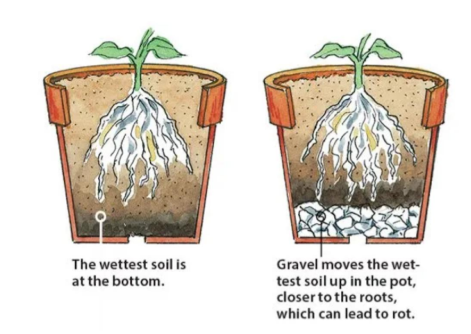
Despite popular advice, gravel at the bottom of a pot does not improve drainage. The soil at the bottom of the pot stays the wettest, and adding a layer of gravel below it moves the wettest soil higher in the pot and closer to the roots.
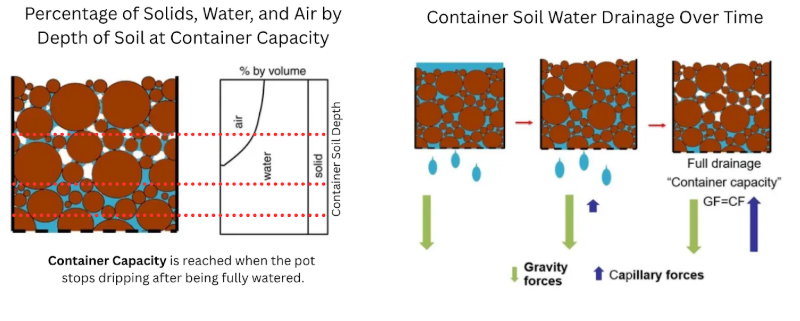
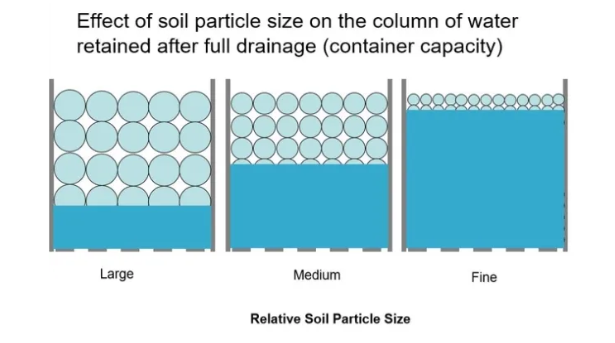
When a fully watered container stops dripping, it has reached container capacity, and the pore spaces in the soil at the bottom of the pot are filled with water. Container capacity is a property of the soil and does not change unless the soil recipe changes. The saturated soil is a consistent height regardless of container width or depth. A soil that holds less water at container capacity than another will dry faster, with all other variables held equal.
Quisque iaculis facilisis lacinia. Mauris euismod pellentesque tellus sit amet mollis.